
User Research, Visual, & Interaction Design
Deep Read is a competition project that aims to solve an SDGs‑related challenge.

Competition brief
in this competition, we focus on SDGs-4 (Quality Education). Gen Z grows up with social media, but the habit of reading short content makes them vulnerable to misinformation due to lack of deep understanding.
Therefore, our team want to help Gen Z read more deeply, starting through books, because books can train the ability to evaluate, analyze, and think critically

Challenge
Before starting this project, I need to understand how Gen Z processes information. Start with literacy, the basics.
But Gen Z literacy in Indonesia drops every year, and the next question is, why could it be like that?

Literacy is often associated with long, boring texts, and this isn't just an assumption.
Data from Talker Research proves that Gen Z can consume digital content for up to 6.6 hours a day, yet according to the Bureau of Labor Statistics, the time they spend reading books is less than 10 minutes.
So, how can we expect them to build their analytical skills, when reading itself already feels like a struggle

Research and finding
First We did an observation with 4 respondents, with a different user archetype: 3 read actively and 1 doesn’t read much.
The goal of this observation was to see:
What reading techniques did they use in digital literacy
What they did while reading about digital literacy
how well they could review or summarize what they read

During the observation session, we spotted a clear pattern:
Every 5-10 minutes users switch from reading to another activity.
All respondents used a mix of scanning and skimming techniques.
Speed reading actually leaves users at the end of a session only able to just skim the text.
Everyone has their own way of reading. Gen Z often uses passive techniques, like just reading, and active techniques, like taking notes and reviewing.
But active reading techniques are often skipped. This is due to several factors:
Active techniques require long reading sessions
Books tend to have a lot of text
Both of these make users feel uncomfortable and tired, thus reducing their interest in deep, and even critical thinking

Problem Statement
"The challenge is that scrolling quickly has become a deeply rooted habit in Gen Z, making it hard for them to focus when reading long content."
Design Exploration
Users avoid active reading because it takes too much time and the text feels overwhelming, even though it helps them think critically.
So, I need to create a more flexible active reading experience that users can control.
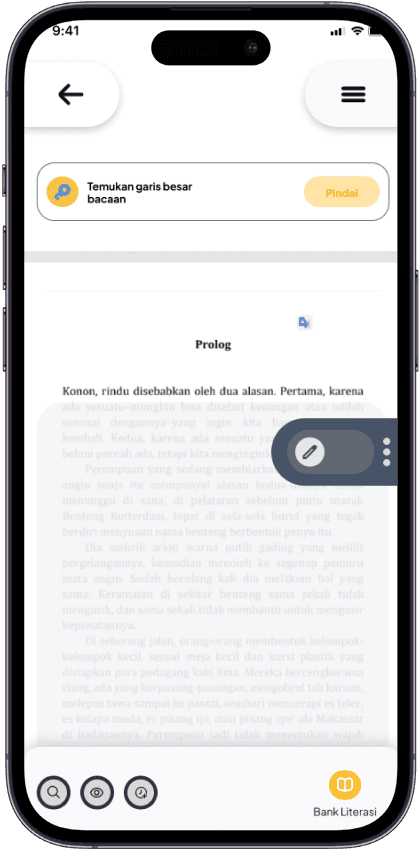
Unlike manual scanning, where users uncover the main topic only after reading.
This approach enables users to grasp the core ideas before reading, helping them build a mental map and establish a framework prior to fully understanding the information.

To reduce reading fatigue from large amounts of text, I adapted a reading method that covers parts of the text.
This approach limits the visible text, allowing users to focus on content within their capacity. Additionally, the interaction integrates content highlighting and note-taking.
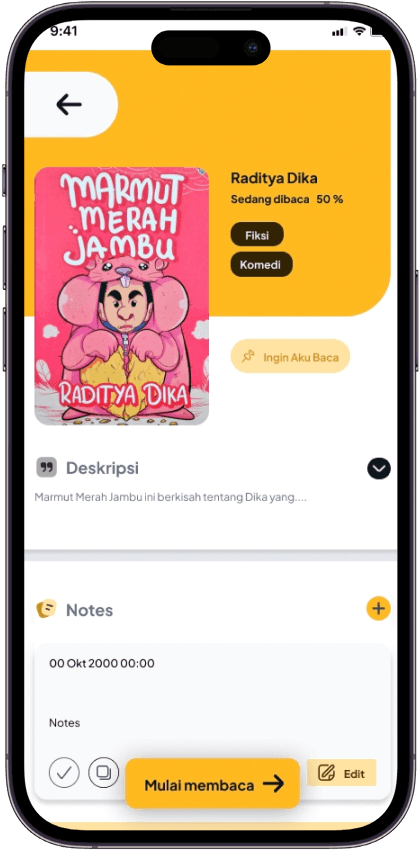
Users can express their feelings and emotions to practice judging information, by giving a rating after they finish reading.
Users feel satisfied when they can share their emotions, and here they can easily share notes or reviews with friends and mutuals, making reading activities more interactive among users.
Test And Iteration
In the user review sharing section, users can react with like or dislike. However, users want more interaction, namely directly asking other users about that information.
Users say scanning main ideas as phrases is better than single words. Phrases give more context.
In the user review sharing section, users can react with like or dislike. However, users want more interaction, namely directly asking other users about that information.
In user testing, participants liked the sharing page, but it should be optimized for direct user-to-user communication rather than just reactions.
Communication happens directly because users prefer specific, in-depth discussions over limited public comments.

Users feel that main ideas in the form of single words only generate random words without context. Therefore, users suggest using phrases for main ideas to make the context clearer.

Testing with 5 users showed positive esponses, participants felt comfortable staying focused and engaging in active discussion, though further adjustments are still needed in terms of size and completeness.
Lesson Learn
Conduct User Testing As Soon As Possible
When our team joined the design competition, we registered at the last minute, rushing everything at breakneck speed.
Caught in the crunch, we postponed usability testing until after finalizing the designs and app, managing only limited, delayed feedback from busy college users.
Going forward, we'll involve users early by integrating testing from the start for iterative improvements.

